Showing posts with label Humanitarian Crisis. Show all posts

Thursday, March 27, 2025

Ten Years After Saudi Arabia's Intervention in Yemen, There Is Only Irreparable Loss


DAWN - "Keep Yemen weak," King Abdulaziz Al Saud, the founder of modern Saudi Arabia, is said to have told his sons on his deathbed. Whether those words were apocryphal or not, the sentiment behind them aligns with Saudi Arabia's long-standing geopolitical strategy toward its southern neighbor. Historically, Saudi policy has sought to maintain a balance of power in Yemen—strong enough to prevent total collapse and regional instability but weak enough to prevent it from becoming a powerful, independent state that could challenge Saudi influence. This approach was evident in past Saudi interventions in Yemen, such as its support in the 1960s for Yemeni royalists against republicans backed by Egypt under Gamal Abdel Nasser.

Yet, exactly 10 years ago, just after midnight on March 26, 2015, Saudi Arabia broke with its traditional approach to Yemen when it launched heavy airstrikes on the capital, Sanaa. The Saudi aim, leading a military coalition that included other Gulf states, was to drive Houthi rebels out of Sanaa after they had effectively ousted the Yemeni government of then-President Abdrabbuh Mansur Hadi. The Saudi-led military intervention, including its aerial bombing campaign that alone killed some 24,000 Yemenis, was not "limited in nature," as the Saudis promised, nor did it "protect the people of Yemen."

Instead, Saudi Arabia's disastrous intervention further fragmented Yemen. Control of the country today is still split between the Houthis, who are much stronger than they were in 2015 and have become the dominant force across northern Yemen; the weak internationally recognized government, mostly confined to Aden; and the separatist Southern Transitional Council (STC) backed by the United Arab Emirates, Saudi Arabia's one-time partner in its military coalition against the Houthis.

Ten years after the airstrikes began, the Saudi-led war against the Houthis has left Yemen in ruins, with no clear winners, only devastation. Every faction involved, from the Houthis to the Saudi-led coalition and their local allies to the coalition's Western backers, has contributed to the suffering. When the Houthis seized Sana'a in 2014, they set the stage for a long, unresolved war that risked drawing in outside powers. In another era, perhaps Saudi Arabia would have been more cautious, but with Crown Prince Mohammed bin Salman assuming more power under his father, King Salman, the prince pushed for what was widely seen by observers as "his war"—what quickly became "Saudi Arabia's Vietnam."

Every side in Yemen's war has been credibly accused of committing grave human rights violations and war crimes, contributing to the country's descent into hell. The use of starvation as a weapon of war—by both the Houthis and the Saudi-led coalition—further underlined the brutality of this conflict. Every horror of war you can name has been carried out in Yemen. The United Nations estimated in 2020 that nearly a quarter of a million people had died directly or indirectly from the conflict, though most believe the toll is much higher. The warring parties have all failed to uphold even the most basic principles of international humanitarian law.

The Saudi-led intervention in Yemen had one main objective: reversing the Houthi takeover of Sana'a. It unequivocally failed in that mission. Instead, Saudi military adventurism entrenched Yemeni divisions, exacerbated humanitarian suffering across the country and left Yemen broken as a state. The consequences of this failure extend beyond the battlefield, shaping Yemen's political future and regional dynamics in ways that will be difficult to reverse. Saudi Arabia's failure isn't just military or political; it's a failure of logic and reason.

In the early days of the war in 2015, Saudi diplomats claimed to U.S. officials that they could defeat the Houthis in six weeks—a prediction that not only foreshadowed military disaster but political miscalculation. Rather than strengthening the Yemeni government as their intervention claimed to, the UAE, Saudi Arabia's main coalition partner, undermined stated Saudi objectives by backing rival Yemeni militias like the STC, which wants to secede and reestablish an independent South Yemen. This lack of a unified strategy turned the anti-Houthi bloc into competing power centers, weakening the coalition and prolonging the war—turning Yemen into a battleground of fragmented allegiances and an increasingly fractious, multi-front, multi-sided war.

Saudi Arabia's efforts to unify the anti-Houthi camp—through the Riyadh Agreement in 2019 and the Presidential Leadership Council that the Saudis engineered in 2022—faltered due to these deep internal rivalries and conflicting agendas, particularly between Saudi-backed Yemeni factions and UAE-supported forces like the STC. Instead of forging a cohesive front, Saudi machinations deepened existing divisions, with internal clashes persisting within the Riyadh-based Presidential Leadership Council. Competing Saudi and Emirati interests and the absence of any centralized command turned the Presidential Leadership Council into another battleground for power struggles within the anti-Houthi bloc.

But most importantly, on the ground in Yemen, the Saudi-led coalition's military failure was rooted in both strategic miscalculations and structural weaknesses. The initial assumption that air power and military superiority could swiftly defeat the Houthis underestimated their resilience and ability to adapt through asymmetric warfare, including drone strikes and other guerrilla tactics developed through years of insurgency in Yemen's northern highlands. The Houthis exploited every Saudi misstep, expanding their reach in Yemen and then launching sustained attacks deep into Saudi territory.

The Saudi-led coalition's failure to achieve its objectives, despite substantial military expenditures, has exposed deep vulnerabilities in Saudi Arabia's military capabilities, draining resources and raising questions about the kingdom's long-term economic stability. The protracted war has left Saudi Arabia vulnerable, which explains why Riyadh abruptly shifted to diplomacy over the past two years, in what has amounted to a significant retreat. Yemen's fragmentation, in a state of de facto partition, has made any cohesive political resolution increasingly elusive, reinforcing Yemen's instability and underscoring the risks Saudi Arabia created through its military intervention.

Instead of trying to reshape Yemen's political landscape, the Saudis are now focused on smaller issues, like border security. From its 2023 agreement restoring diplomatic ties with Iran, brokered by China, to the surprising visit in April 2023 by the Saudi ambassador to Sanaa, where he met with Houthi leaders, Riyadh has moved into damage-control mode. Saudi officials have been forced to adjust their approach, from bellicose rhetoric about driving the Houthis out of power to more modest aims of containing threats to the kingdom. This about-face reflects a recognition that military intervention alone cannot resolve the stalemate in Yemen.

The Houthi strikes in the Red Sea, targeting international shipping, U.S. naval ships and Israeli targets, in declared solidarity with Gaza, highlight the missteps of the Saudi war, which ended up elevating the Houthis as a regional actor. Once only a tribal insurgency with aims on northern Yemen, the Houthis now have global clout. The fact that both the Biden administration and Trump administration have ordered U.S. airstrikes against them only plays into Houthi narratives that they are leading the armed resistance to both the U.S. and Israel. But the Houthis' survival still ultimately depends on negotiation, not endless war. Despite the failed Saudi intervention, the Houthis have not won the war in Yemen, even if they have emerged stronger.

For Yemenis, the past decade has been a cascade of wasted years, shattered hopes and unimaginable suffering. The youngest generation has known nothing but the horrors of this brutal conflict. In gatherings today, people recount everything they have had to endure. A mother points to her 9-year-old son: "I gave birth to my son in a hospital while coalition bombs fell on the funeral hall. Remember that day? That's when he was born." Another father calmly describes how he lost his teenage son to a bullet fired by a Houthi sniper in Taiz. Yemenis joke darkly that by the time there is any real redress for all the war's destruction, it won't be enough to just rebuild. They would need these lost 10 years given back to them—an impossible demand for an irreparable loss.

______________________________________________
This article was first written for and published on the DAWN website. 

Saturday, October 22, 2022

The Flaws and Failures of International Humanitarian Aid to Yemen


*Arab Center in Washington DC -  In a July 2022 report on the UN’s humanitarian response to the crisis in Yemen, the UN Inter-Agency Humanitarian Evaluation Steering Group concluded that “the quality of humanitarian aid in many areas was unacceptably low,” and that affected populations repeatedly said that “they did not know how to access aid, or how to get on the ‘lists’ that led to assistance.” Yemenis from all walks of life have indeed been highly critical of how international humanitarian assistance has been undertaken in Yemen. In fact, a social media campaign using the hashtag #WhereIsTheMoney has been expressing Yemenis’ frustration over the failures in implementing international humanitarian aid, questioning the quality of said aid, and demanding transparency from the UN and other international agencies regarding the methods and process for spending funds.

Moreover, a growing number of Yemen experts have for some time been sounding the alarm about the failures of the international humanitarian response in the country. Yemeni American historian Asher Orkaby, Yemeni investigative journalist Ali Salem, this author, and the Sana’a Center for Strategic Studies have all published striking critiques of the international humanitarian aid system in Yemen, and the Sana’a Center also briefed the UN Security Council about the same matter.

All of this criticism indicates that there are serious problems that the international humanitarian community needs to address in order to truly relieve human suffering in Yemen. Problems include a weak strategy that focuses on short-term solutions, counterproductive stances of neutrality and impartiality, reluctance to speak out against warring parties’ abuse of aid and humanitarian workers, and a lack of sufficient inclusion of Yemeni professionals. To address these problems, it is absolutely imperative that international organizations work to stamp out corruption, to reevaluate their strategies and practices, and to involve local partners and experts to a greater degree. Only by making these changes and by focusing on long-term solutions will these organizations be able to contribute to permanently resolving the humanitarian situation in Yemen.


The Scale of the Current Humanitarian Crisis

The loss of livelihoods due to the ongoing conflict has led millions of Yemenis to rely on humanitarian aid, which is especially significant in a country that for decades prior to the conflict had been ranked as the poorest country in the Arab world. In 2017, the UN described Yemen as the world’s worst humanitarian crisis, until Afghanistan was named in 2021 as being poised to take over that terrible title. Since the conflict began in Yemen, there have been steadily growing international humanitarian efforts, and the 2021 Global Humanitarian Assistance Report lists Yemen as the world’s second highest recipient of international humanitarian assistance. Although Yemen still has not received all of the funding that has been pledged, since 2015, billions of dollars have been delivered from international donors to fund the UN-led humanitarian response plan.


Nonetheless, the humanitarian situation remains dire. It is estimated that more than two million Yemeni children under the age of five will suffer from acute malnutrition in 2022, and that nearly 19 million people in Yemen will suffer from acute food insecurity, compared to 13.5 million in 2020. Children who suffer from severe malnutrition are at risk of ??irreversible damage to their future health and brain development, including stunted growth. Meanwhile, the number of children dropping out of school is on the rise, reaching over two million. More than eight million women and girls of childbearing age in Yemen desperately need access to reproductive health services. And a staggering number of Yemenis—between 71 and 78 percent of the country’s nearly 30 million people—now live in poverty, according to a June 2022 World Bank report.

Weak Strategy

Most international humanitarian and human rights groups working on issues related to Yemen know what they want to do, but fail to fully understand potential side effects of their work. That is to say that they are aware of their work mandate and strategy, but lack the ability to carry them out effectively without creating disadvantages for the Yemeni population.

These organizations’ strategies tend to focus on implementing their own agendas, which typically have a temporary, short-term impact, and which mainly aim to satisfy donors and meet their expectations. But for many Yemenis these strategies are irrelevant, do not address the roots of the problem, and fail to provide long-term solutions to persistent issues.


A prime example of weak humanitarian aid strategy is the World Food Program’s (WFP) practices in Yemen. In September 2022, the WFP’s country director said about the organization’s work there that it was “able to keep people from starving—to keep famine at bay.” Keeping famine “at bay,” however, is a short-term solution, one that eventually creates a situation of foreign aid dependency. When the WFP won the Nobel Peace Prize in 2020, many Yemenis were shocked, especially given the WFP’s flawed work in the country. Again and again, the WFP has been accused of letting food rot in local warehouses and of sending rotten food to Yemen, and possibly even doing so deliberately. It is possible that the tragic results of the WFP’s food assistance program are due to the extremely difficult logistics of operating in Yemen. This, however, highlights another problem: the neutrality principle.

As the conflict has continued, more armed militia groups have emerged and the war economy has flourished. In this context, international humanitarian organizations’ position of neutrality has translated into a tragic silence on armed groups’ abusive practices against humanitarian work and their obstruction of humanitarian assistance. Numerous media reports have shed light on abuses committed by the country’s warring parties against humanitarian aid. But despite even an in-depth Associated Press investigation detailing aid abuses carried out by all parties to the conflict, international humanitarian aid groups have failed to condemn these abuses.

In April 2021, after three years of working as the UN Resident Coordinator and Humanitarian Coordinator in Yemen, Lise Grande spoke out against the Houthi armed group’s violations of humanitarian aid assistance during a congressional subcommittee hearing. However, the UN’s own offices in Yemen have also been accused of major corruption.


What Yemenis need from international humanitarian aid workers while they are in their posts is the bravery that Grande demonstrated. They must name and shame armed groups that are responsible for making the humanitarian crisis worse. A potential starting point for this effort would be a condemnation of the Houthi armed group’s restrictions on women, including female humanitarian aid workers (both Yemenis and foreigners), whom the Houthis force to have a male guardian when traveling for work inside Yemen.

International organizations’ weak strategies perhaps stem from a fear of losing funding, from a commitment to doing work by the book as their donors would like them to do, or from certain elements of orientalism. Unfortunately, satisfying donors comes as a top priority on their agenda. The social media pages of many international humanitarian groups working in Yemen contain many posts thanking specific donors for their funding, as if part of their work is to respond to donors’ need for recognition.

Submission to Warlords

Because the majority of Yemen’s population lives in areas controlled by the Houthi armed group, the majority of humanitarian work in the country is done in those areas. After Houthi leaders realized that international aid could be a powerful tool, they created in 2019 a Houthi-owned humanitarian body called the Supreme Council for the Management and Coordination of Humanitarian Affairs and International Cooperation (SCMCHA). This author asked numerous civil society actors and groups, including local humanitarian aid workers, about their thoughts on SCMCHA. Almost all of those questioned had the same response: SCMCHA’s main purpose is to deliver intelligence to senior Houthi officials about independent local humanitarian aid groups, to impose hundreds of restrictions on local and international aid organizations, and to tax or otherwise deduct money from international humanitarian aid funding. SCMCHA holds a monopoly over all Yemeni humanitarian aid work in areas under Houthi control, which means that any civil society groups trying to undertake aid work must abide by Houthi authorities’ rules and requirements, and must submit to total supervision.

International humanitarian aid groups have only spoken out against SCMCHA’s violations on one occasion. In February 2020, the Associated Press reported on a dispute between the Houthis and UN agencies, which occurred after Houthi authorities demanded a tax of 2 percent on each of the UN’s humanitarian programs. As a result, international donors suspended aid to areas under Houthi control, which forced the Houthis to put their taxation plan on hold, thereby encouraging donors to resume aid.


However, Houthi authorities have found another method to make money off of humanitarian aid, namely by charging Yemenis themselves. During the month of Ramadan in 2022, for instance, Houthi authorities issued an order that has largely gone unmentioned outside of the country, and that stated that no one was allowed to donate food or aid outside of the group’s control or supervision and that doing so required a license. Because international humanitarian aid groups attempt to uphold impartiality in their work, they are very often submissive to the Houthis’ orders, which allows Houthi authorities to benefit from the aid that is meant for individuals and local organizations.

Excluding Potential Local Partners

All of these problems could be mitigated or fully solved if more Yemeni voices were involved, and if the advice these potential local partners have to give was heard. International organizations must include more Yemeni humanitarian aid workers in the efforts in Yemen. Yemenis, who have extensive local knowledge and an ear to the ground, are best able to identify the needs of their communities and to suggest possible solutions. Yemeni humanitarian professionals can promote the best possible tactics and strategies to both incentivize and pressure the Houthis and other armed groups to change their behavior.

This is not to say that there are no Yemeni humanitarian professionals working at international humanitarian organizations, but rather to emphasize that there are not enough of them, especially at the decision-making level, among the teams that are actually designing humanitarian plans and programs.

Alternative Strategies

After eight years of conflict, the humanitarian crisis in Yemen is no longer an emergency situation, but rather has transformed into a dire and long-lasting humanitarian situation, creating a complex war economy that is proving all but impossible to dismantle. If the international humanitarian community truly aims to relieve human suffering, it is imperative that it take a comprehensive view and work to design strategies that provide long-term solutions and address both everyday needs and the roots of diverse problems.

Some critics of international humanitarian aid groups operating in Yemen argue that their flawed performance has been counterproductive and that perhaps the humanitarian crisis would have improved were it not for extensive engagement from the international humanitarian aid community. In order to remedy the situation, international humanitarian aid groups should shift their strategies and approaches to development aid, which typically aims to address structural problems that contribute to human suffering. If development aid is not part of their mandate, they must at least establish close collaboration between humanitarian and development programs to address the underlying causes of humanitarian problems such as food insecurity and malnutrition.

International humanitarian organizations in Yemen need to play a positive role and to remain open to learning from local partners, to listening to Yemenis’ demands, and to paying attention to Yemen experts when they warn about the damage the international humanitarian aid system intentionally or unintentionally creates.


*This policy analysis piece was written by Afrah Nasser for the Arab Center, and it was published on AC's website on October 20, click here to view the original version. 

Monday, January 11, 2021

Designating the Houthis Threaten Aid

It’s brutal what’s happening against civilians in Yemen. I don’t know how much more suffering civilians can tolerate. Life is already hell in Yemen. The designation would have disastrous ramification on the already dire economic & humanitarian crisis in Yemen.

Accountability for Houthis abuses is very crucial but does the US State Department realize that this action would harm civilians more than the Houthis? & would threaten humanitarian aid on which millions of Yemenis rely on for survival? 

Comes to my mind now the words of the UN’s @UNReliefChief Mark Lowcock, “Yemenis are not “going hungry”. They are being starved.” Such designation would lead to exacerbating an already shocking level of hunger in Yemen.

The designation would have a devastating effect on the humanitarian response in Yemen, in the short & long terms. As if the current death toll wasn't enough! With such designation, the U.S. would risk complicity in hundreds of thousands of preventable civilian deaths in Yemen.

Amid shocking levels of hunger in Yemen, extreme shortages of humanitarian funds & a gruelling environment for aid groups to operate at, the designation would worsen the already terrible situation. International aid groups have warned a while ago that blacklisting the Houthis would cost innocent lives in Yemen. 

We in Human Rights Watch warned last month how the designation would threaten aid. HRW said any designation of the Houthis should at a minimum provide clear and immediate exemptions for humanitarian aid, but millions of lives should not have to depend on that.

Last year, Human Rights Watch documented that the parties to the conflict, particularly the Houthis, have imposed a series of obstacles for local & intl' humanitarian groups to navigate, including logistic difficulties and outright obstruction of aid delivery.

Clearly, the designation would exacerbate an already difficult situation for humanitarian groups. Houthi authorities and other warring parties should ensure the unimpeded passage of humanitarian assistance, including in the event of this designation.

What I find most incredible is how Trump's admin still found the chance to announce the potential designation, while Trump is creating this craziness in DC.

The US has stood by as Saudi and UAE forces have committed war crimes in Yemen, sometimes with US weapons. It adds insult to injury that the Trump administration – as a parting gift to its Gulf allies – would take such drastic action that is sure to harm even more civilians.

To say that the designation represents a huge risk to millions of civilians, it doesn't dismiss the fact that the Houthis have committed gross human rights violations & war crimes - as the UN's GEE found in its 2020 report


Wednesday, October 28, 2020

Webinar: A Cascade of Crises: Yemen


This was a webinar part of the "Humanitarian Congress Berlin", to discuss the humanitarian situation in Yemen, organized by Médecins Du Monde, the German Red Cross, the Berlin Chamber of Physicians, Médecins Sans Frontières, Oxfam and Greenpeace.


I was the moderator and the panelists were:


Sadam Al-Adwar, Co-founder & Executive Director, Musaala For Human Rights, Marib, Yemen

Sami Yahya al-Hajj, Physician, Sana’a Yemen

Majed Taleb, Deputy Coordinator, Doctors of the World org, Sana’a, Yemen

Wednesday, October 14, 2020

War and COVID-19 in Yemen


Victims of Covid-19 are buried in Taizz, Yemen, June 24, 2020. © 2020 REUTERS/Anees Mahyoub


After Yemen’s 2011 uprising broke out, the country went through a series of political upheavals and cycles of violence that tore the country apart, including the start of a full-scale civil war in 2014 and the Saudi- and UAE-led intervention in 2015.

In a context where civilians have been deliberately attacked by all sides, COVID-19 has added a new layer to the unspeakable suffering for millions of civilians in Yemen, whilst Europe has reacted with development aid but has thus far failed to support need for accountability in the conflict.

The War


The Houthi armed group, in alliance with forces of former president Ali Abdullah Saleh, militarily seized Yemen’s capital in September 2014, ousting President Abdu Rabbu Mansour Hadi. Saudi Arabia and the UAE, leading a coalition of nine Arab states with military support from the United States, began an aerial bombardment campaign against the Houthi–Saleh forces to support Hadi’s government.

Along with the US, the UK, France and other Western states have continued to sell weapons to the Saudis and other coalition members. Hadi fled to Saudi Arabia in 2015. Saudi Arabia said it was acting in defence of Yemen’s legitimate government. Six years on, the coalition has not achieved its goal of restoring Hadi to power.

Meanwhile, the Houthi armed group has consolidated its hold on Sanaa and much of the northern highlands, particularly after Houthi forces assassinated their previous ally, former president Saleh, in December 2017.

Today, there are more than 30 fronts across Yemen involving fighting by various domestic armed groups, in addition to the coalition’s airstrikes. Both sides to the conflict have been responsible for unlawful attacks that harmed civilians, many of them carried out with disregard for civilian life, and that may amount to war crimes.

Saudi Arabia claimed in 2015 that its military operation would be “limited in nature, and designed to protect the people [of Yemen]”. But the Yemeni group Mwatana has reported that almost a third of all airstrikes carried out by the coalition hit civilian sites such as homes, hospitals, schools, weddings, farms, food stores and water wells, killing and wounding more than 18,400 civilians and counting. The actual numbers of civilian casualties is most likely higher because data collection has been extremely difficult.

The Saudi-led coalition is not the only party responsible for civilian deaths and injuries. Houthi forces have used banned antipersonnel landmines in many parts of Yemen, fired artillery indiscriminately into cities such as Taizz and Hodeidah, killing and wounding civilians, assassinated dissidents and launched indiscriminate ballistic missiles at civilian infrastructure in Saudi Arabia.

There are no clear estimates of the number of civilian casualties from Houthi attacks because, again, data collection has been extremely difficult. Killings and other abuses committed by Houthi forces may also constitute war crimes.

The Pandemic


As the Yemeni civilian population is already suffering in an enormous man-made humanitarian crisis, the COVID-19 crisis has added a new stress to a health system which has already been shattered by war. Under-resourced and buffeted by years of conflict, it is inadequately prepared to care for COVID-19 patients and contain the spread of the virus. Nonetheless, the pandemic has been only one of Yemenis’ many health concerns.

Prior to COVID-19, several other notable disease outbreaks including cholera, diphtheria, measles and dengue fever were reported in Yemen. Cholera alone has affected nearly every Yemeni family in some way, with almost two million suspected cases since 2016.

Yet, more than half of Yemen’s health facilities are closed or partially functioning. Since 2015, parties to the conflict have targeted not only medical facilities but also medical personnel, as health workers have been threatened, injured, abducted, detained and killed.

Consequently, many medical professionals have fled Yemen, further damaging the healthcare response. The Houthis have severely hampered and diverted international aid in areas under their control. Parties to the conflict have also possibly used starvation as a weapon of war, further weakening Yemenis’ health. In 2017, the UN humanitarian chief Stephen O’Brien called Yemen the greatest humanitarian crisis since the end of World War II.

In light of these serial abuses, the pandemic adds a new layer of misery for Yemenis whose mental and physical health and access to healthcare infrastructure has already been severely depleted. The country’s first confirmed case were recorded on 10 April 2020.

Despite that the country’s limited testing capacity, as of 26 September the number of confirmed cases in Yemen had reached 2,034, with 588 associated deaths. It is impossible to know the actual numbers.

The Houthi authorities in Yemen’s north were accused of hiding the real impact of COVID-19 in areas under their control. UN officials have raised concerns that the coronavirus could infect nearly 16 million people in Yemen, 55 per cent of the population, based on epidemiological projections.

Saudi Arabia announced in April that the coalition would begin a unilateral ceasefire following the call by UN Secretary-General António Guterres in March for a global ceasefire to advance peace and combat the pandemic. Many humanitarian and human rights groups welcomed the move and thought there was a window to begin a process to end the suffering of millions of civilians in Yemen. Hostilities nonetheless continued.

The Urgent Need for Accountability


While the European Union continues its humanitarian aid to Yemen, €484 million since 2015, it has made limited efforts to suspend arms sales to the coalition, despite a legally binding EU Common Position stating that arms exports to countries that “use the military technology or equipment [...] aggressively against another country" should not be granted an export license.

Following the Saudi government’s killing of Jamal Khashoggi in 2018, the European Parliament passed resolutions calling for an EU arms embargo against Saudi Arabia. It also urged EU member states not to sell arms to Saudi Arabia, the UAE “and any member of the international coalition”, or to the government of Yemen and other parties.

While some EU states have halted or restricted exports of military equipment to the coalition – due to international humanitarian law and human rights concerns – others have continued with supplies. US State Department officials have warned that US officials could risk war crimes for continuing to approve arms sales, given the Saudi-led coalition’s pattern of unlawful attacks in Yemen over the course of years.

In December 2019, the European Centre for Constitutional and Human Rights, supported by five nongovernmental groups, urged the International Criminal Court (ICC) prosecutor to investigate the role of executives of European arms companies and licensing officials in violation of international humanitarian law that could amount to war crimes in Yemen.

In June 2020, in the midst of the COVID-19 crisis, the Secretary General removed the Saudi-led coalition from his “list of shame” (a list made for countries responsible for grave violations against children in armed conflict) despite continued grave violations against children in Yemen.

The following month, the UK announced that it would resume arms sales to Saudi Arabia despite documented evidence of continuing laws-of-war violations by the coalition. The same goes for other states, including the US, France, Canada and Spain. Saudi Arabia and the UAE are the two largest customers of the European arms industry.

The atrocities committed cannot be swept under the rug, but the unwillingness of states involved in the conflict to acknowledge the gross human rights abuses and international humanitarian violations committed in Yemen makes it difficult to believe that the victims will one day find justice and redress.

As most of the world is preoccupied with the pandemic in their own countries, the disastrous humanitarian situation in Yemen has received even less attention. However, the work of local and international human rights groups remains robust and vital – sending a message to not give up – providing lifesaving support to Yemen’s suffering population while documenting abuses and violations that will prove vital for any form of accountability and reconciliation in the war torn country.


_______________________________________________
This article was first published in Istituto Affari Internazionali

Friday, December 20, 2019

US: Extend Temporary Protected Status for Yemen

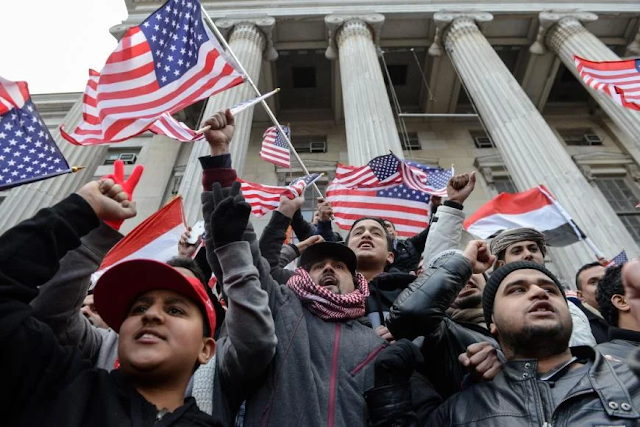
People participate in a Yemeni protest against President Donald Trump's travel ban in New York City, US, Feb. 2, 2017.  © REUTERS


* This report was written by Afrah Nasser for Human Rights Watch, and published first on HRW's website on December 20, 2019. Click here to read the original source.


The United States government should ensure that the approximately 1,250 Yemenis currently living in the US are not deported to their war-torn country, Human Rights Watch said today. The government should extend and redesignate Temporary Protected Status (TPS) for Yemen, which expires on March 3, 2020.

The US has contributed to the dire situation in Yemen by continuing to supply weapons to the Saudi Arabia-led coalition responsible for numerous violations of the laws of war in Yemen.

“Given the US role in the Yemen conflict, it would be particularly cruel not to extend TPS for Yemenis in the US,” said Andrea Prasow, acting Washington director at Human Rights Watch. “Washington needs to make clear that it won’t send people back to a country wracked by war and famine.”

By redesignating TPS instead of merely extending it, the US government would expand eligibility for Yemenis who arrived after the current January 4, 2017 cutoff date. This is crucial to ensure that all Yemenis eligible for temporary refuge in the US are protected from deportation.

Since the current conflict began in March 2015, Saudi Arabia and the United Arab Emirates (UAE) have been leading a military air and ground campaign against the Houthis, an armed group that controls much of northern Yemen. The Saudi-led coalition, which has received weaponry, intelligence, and logistical assistance from the US, has committed scores of indiscriminate airstrikes that have killed and wounded thousands of civilians. According to the Yemen Data Project, more than 17,500 civilians have been killed and injured in Saudi-led coalition airstrikes since 2015.

Both the coalition and the Houthis have been responsible for unlawful attacks, forced disappearances, and obstructing delivery of food and medical assistance. Parties to the conflict have harassed, threatened, and attacked Yemeni activists and journalists.

The US Department of Homeland Security (DHS) needs to determine by January 3 whether it will extend, redesignate, or terminate TPS for Yemeni nationals and stateless habitual residents of Yemen.

The department last redesignated TPS for Yemen in January 2017. That year, the United Nations Office for the Coordination of Humanitarian Affairs declared Yemen to be the world’s largest humanitarian crisis, partly as a result of the armed conflict. The country’s humanitarian situation remains dire today, with deteriorating conditions for millions of civilians at risk from the fighting and famine.

In a travel advisory issued in April, the US State Department stated that “no part of Yemen is immune to violence,” and in November, warned, “Do not travel to Yemen due to terrorism, civil unrest, health risks, kidnapping, armed conflict, and landmines.”

The UN Group of Eminent Experts on Yemen, in its September report to the UN Security Council, concluded that “there is no safe place to hide from the fighting” in Yemen and that “parties to the conflict in Yemen are responsible for an array of human rights violations and violations of international humanitarian law. Some of these violations are likely to amount to war crimes.”

Human Rights Watch has documented numerous serious laws-of-war violations by all sides in Yemen. Parties to the conflict have failed to seriously investigate alleged war crimes and other unlawful attacks. While the Saudi-led coalition created the Joint Incidents Assessment Team (JIAT) to assess “claims and accidents” during coalition military operations, a Human Rights Watch investigation into the JIAT found that it has failed to credibly investigate allegedly unlawful airstrikes.

“The US has contributed to laws-of-war violations in Yemen by continuing to supply bombs and other weapons to abusive Saudi-led coalition forces,” Prasow said. “It shouldn’t add to its disgraceful record by forcibly returning Yemenis to that conflict.”

Wednesday, October 3, 2018

Yemen’s Humanitarian Crisis Persists, Despite Humanitarian Funding


When over $2 billion was pledged for the 2018 Yemen Humanitarian Response Plan (YHRP) earlier this year, it was considered not only a success but also the best funded response plan worldwide according to anonymous aid workers who spoke to the author during the UN General Assembly. So far, 65% of the pledged funds have been delivered. The delivery of the remaining funding is expected throughout this year.

Despite all of the aid allocated to Yemen, the country remains the world’s largest humanitarian crisis. Famine-like conditions remain, while two-thirds of its roughly 29 million people need humanitarian assistance, and about 8 million people do not know where their next meal is coming from. Cholera and other infectious diseases continue to threaten millions of people amidst a collapsing health care system.


GROWING NEEDS

While there are about 183 United Nations (UN) agencies and non-governmental organizations (NGO)s working together across Yemen’s 23 governorates, all coordinating together the delivery of humanitarian aid to millions of people, they are struggling to meet the people’s growing needs.

One UN humanitarian aid worker in Sana’a, who prefers to remain anonymous, told the author, “As the conflict nears its fourth year, Yemen’s economy has collapsed and its health care system is devastated. The number of internally displaced persons increases and more humanitarian needs emerge. Humanitarian needs have increased, often outstripping the capacity to respond and putting pressure on humanitarian organizations that have to provide for failing social services which are beyond their mandate.”

Two major events this year have impacted the country’s massive humanitarian crisis. First, an on-and-off again battle in Hodeidah in May led to large numbers of civilian casualties, the displacement of thousands of people, the shelling of a World Food Program (WFP) warehouse, and threatened humanitarian assistance to the city and other neighbouring cities. A few weeks ago, the Yemeni Rial hit its lowest value in history. As a result, 3.5 million are food insecure due to high-cost basic food commodities and two million are at a heightened risk of famine.

HINDERED ASSISTANCE

The humanitarian crisis is further exacerbated due to the conflict and the hurdles to conduct and maintain humanitarian work. “Since the Saudi-led coalition closed Sana’a airport, the only possible way to fly aid to Sana’a is through UN planes, which are often limited,” explains Patrik Olsson, Yemen Program Officer at the Swiss Agency for Development and Cooperation (SDC). “Estimates put most of Yemen’s 29 million population in the northern part of the country. With limited access to the north, we are not able to provide the full extent of urgent assistance needed to the most vulnerable groups” says Olsson. 

Most of the international humanitarian organizations that spoke to the author, complained about the difficulties of obtaining visas to the country. For instance, Olsson recalls, “The de-facto government in Sana’a sometimes requires our CVs and academic transcripts in order to obtain a visa, and very often they require that we have a visa issued from the Yemeni government in Riyadh before they give us a visa to Sana’a.”

Humanitarian work faces further structural problems that hinder or slow down the process. According to an anonymous aid worker, the Houthis’ de facto government in the north requires that transported aid be taxed—a process that slows down the distribution of humanitarian aid to vulnerable groups in northern areas. The fragmentation of the Yemeni state in the course of the ongoing conflict has allowed the emergence of other non-state actors who disrupt the work of international aid groups. For example, according to the UN Panel of Experts’ report, proxy forces of the Saudi-led coalition have obstructed humanitarian operations or the distribution of aid.

Access to different areas across the country is also undermined by the spread of violence. For instance, after one of its staff was killed in Taiz last April, the International Red Cross pulled seventy-one staff members out of Yemen; impacting the crucial assistance it provides for people in need. Recently, Doctors without Borders had to suspend its activities in Ad Dhale governorate in southern Yemen following an attack against staff housing.

HUMANITARIAN DIPLOMACY

Reports show that food has been used as a weapon of war in Yemen. As a result, humanitarian workers have had to negotiate the delivery of aid to hard-to-reach areas. Two of the leading international actors in the conflict—Saudi Arabia and the United Arab Emirates—pledged a combined total of $1 billion in April 2018, raising questions about the contradiction between their generosity and their military activities in the country. “We avoid partnering with countries directly involved militarily in Yemen because they politicize their assistance,” said one humanitarian worker who prefers to be anonymous. “That goes against the three fundamental principles of humanitarian actions: independence, neutrality and humanity.”

Humanitarian access has been a major issue facing humanitarian actors. By February 2018 it was estimated that there were constraints in 90 per cent of districts in Yemen. This has required more humanitarian negotiation efforts to ease difficulties. Humanitarian diplomacy has been a key element in facilitating international humanitarian work in Yemen. “We work in a difficult operational environment; we are constantly involved in humanitarian negotiations with all warring sides to ensure we have full access and can assist the most vulnerable groups,” says the UN humanitarian aid worker in Sana’a.

The WFP has managed to feed about eight million people per month, scaling up their targeted population of last year’s 3 million people.

“If it wasn’t for the international and local aid community in Yemen, many more lives would have been lost already,” says the UN humanitarian aid worker in Sana’a. “When we face attacks and obstacles, it doesn’t mean that we have to stop our work, but it’s a reminder that warring sides have to abide by the international humanitarian law and guarantee the safety and security of humanitarian relief personnel.”

Among humanitarian aid workers, the consensus seems to be that the aid system is broken in Yemen. Those most in need rarely receive basic assistance due to the unique restrictions on all but one of the airports being closed, lengthy visa processes, obstruction of aid deliveries by regional state actors, as well as targeting of staff. Many of these limitations are not unusual to the providing of aid in a conflict zone, what is unique is that Yemen includes all of these factors in addition to being a poor population prior to the conflict with erratic media coverage. All these factors exacerbate conditions on the ground that aid workers continue to navigate seemingly with their hands tied behind their backs.

____________________________________________________________________
This article was written for and published in The Atlantic Council's website today. 

Saturday, September 29, 2018

Yemen at the UN General Assembly 24-28 Sep 2018


Yemeni President, Hadi was highly criticized for his picture in New York with a cake, celebrating the
anniversary of the September 26 Revolution of 1962; while a widespread starvation is hitting Yemen.


This week, the UN General Assembly’s (UNGA) annual debate began and, as I predicted in my review of last week, all eyes were on the American president Donald Trump - which has shifted the focus away from more serious global issues. This week has also been bad timing for Yemen, as almost all American press attention has been focused on the all-American if historical hearing in Washington, Ford-Kavanaugh Senate hearing.


Overall, Yemen for UN officials remains a top humanitarian concern while it remains solely a political issue for the Yemeni-Saudi-Emirati block. Between Trump’s misleading claims about Yemen, the Yemeni government’s continuous obsession with Iran’s role in Yemen, and the Saudi-UAE well-planned and well-funded PR work in New York, discussions about the conflict in Yemen remain highly selective and focused on more war rather than peace. Despite the fact that Yemen is on this year’s UNGA agenda, no substantial progress was achieved this week in the security council. However, a glimpse of victory was achieved for Yemeni victims of war in Geneva at the UN Human Rights Council, when the council voted to extend an inquiry commission into war crimes in the country.


Yemen Humanitarian Response Plan


The week began with a high-level session on the humanitarian crisis in Yemen organized by the UN office (watch here), headed by the UN Relief Chief, Mark Lowcock. The session included remarks made by Lise Grande from OCHA in Yemen, Tedros Adhanom Ghebreyesus from the World Health Organization, Kelly Clements from the UNHCR, Helle Thorning-Schmidt from Save the Children, Mai Al-Eryani from the Yemeni Women’s Union. All have painted a bleak picture of the unspeakable human suffering in Yemen. However, I found the speeches shying away from denouncing the weaponization of aid by the warring sides. The speakers might have been intimidated to express so fearing the consequences.


Sep 24 - UN high-level session on Yemen.


Next, we heard from the Yemeni foreign minister, Khaled al-Yamani, the Saudi ambassador to the UN, Abdallah al-Mouallimi, the UAE minister of state for international cooperation, Reem Al Hashimy and other European countries. The most striking remark was made by al-Mouallimi,, who with a straight face stated that, “Yemen is not a man-made disaster, it’s rather a Houthi-made disaster.” Outrageous, right?! Saudi Arabia has mastered the blaming-game in the course of Yemen war, and the Hadi government has just followed along. 


Both the Saudi and Emirati officials minimized the problem of limited access for aid operations to Yemen, stressing that it wasn’t important to open Sana’a airport as other entries are opened. This implies that the UN special envoy to Yemen, Martin Griffiths’ recent wish to open Sana’a airport soon is only a wishful thinking.


The good news is that both Denmark and Canada said during the session that they will add new funds for the humanitarian aid fund; about $20 million from Denmark and $28m from Canada. I also finally managed to do an interview with Sweden's Special Envoy for Yemen, ambassador Peter Semneby who attended the session. I say “finally” because both my two previous interview request emails were had gone unanswered. The interview will be published soon.


Trump on Yemen


Tuesday was day one of UNGA’s annual debate and it began with the most truthful moment in this year’s UNGA session so far consisting of the audience laughing at Mr. Trump’s first sentences in his speech. It was difficult to expect any hopeful comment from Trump about American efforts for a peace process in Yemen, as he was busy bashing Iran and globalism. Next day, Trump made another awful misleading claim, this time about Yemen, during a major press conference held on the sidelines of the UNGA. Unfortunately, I had nasty flu and couldn’t attend the press conference, but hundreds of journalists attended the conference and none of them posed a single question about Yemen. Questions mainly were focused on American domestic affairs; especially the Ford-Kavanaugh Senate hearing. Despite the lack of questions on Yemen, Trump mentioned Yemen once in his 80 minute-long press conference when he was speaking about Iran. “Yemen is a mess, but it’s getting better,” said Trump. No journalist dared to challenge him about his false claim about the soon-to-be world’s largest famine.


Saudi-UAE PR Work


One might think UNGA is the most powerful diplomatic event of the year but I’ve been observing how events happening on the sidelines of UNGA are rather more important events. There are about dozens of events happening outside the UN organized by Saudi Arabia, United Arab of Emirates, the Yemeni government, Qatar, the US state department, where stronger messages are conveyed via controlled narratives.


The annual “United Against Nuclear Iran” summit; for instance, has been taking place since 2008 on the sidelines of UNGA to bash Iran and all its supporters. This year’s summit included an explosive speech by the National Security Advisor of the United States, John Bolton - one could leave the room believing a US war against Iran is surely on its way.


Both the Saudi UN ambassador and the Saudi foreign minister, Adel Al-Jubeir held separate conferences on the sidelines of UNGA. These events are attended by invitation only, sent to influential officials and media outlets. Not to mention that Saudi Arabia, UAE and Qatar have each its own media groups working with it. Hence, it’s not only a diplomatic war but also a media war. Each country seems well-prepared with its UN events, outside-UN events, its media outlets - all geared to shaping the international public opinion.


Where is the Yemeni government in all of that? The Yemeni government remains a puppet in the hands of the Saudi-UAE coalition's hands. Evidently, Yemeni president, Hadi’s speech on Wednesday was one written by Saudi Arabia.


My takeaway from this week is that media is a weapon both KSA and US have used very well because of their great economic capability. They can control newspaper coverage, and direct their own TV channels and organize well-publicized press conferences, thus sending their well-crafted messages to the world from - in other words, money speaks loudly!


As an independent freelance journalist, I don’t know how long I can survive in this media landscape. Last year, I founded “Sana’a Review” aiming to provide independent critical stories on Yemen with a group of Yemeni writers. I’ve been looking for funds and have knocked on Swedish and Danish doors, but all my requests have been unsuccessful so far. I am calling on you, dear readers, to forward any tips you may have on potential funding sources, specifically for Sana’a Review, or even if you would personally like to support this publication, please contact me: (afrah@sanaareview.com).

Sunday, September 23, 2018

Yemen at the UN General Assembly 18-21 September 2018

(c) Abdi Latif Dahir. 

Next to Dag Hammarskjöld's portrait. 

I was fortunate to be accepted in the Dag Hammarskjöld Journalism fellowship program and have the opportunity to attend the UN General Assembly (UNGA) 73rd Session in New York. The fellowship program established in remembrance of the second Secretary-General of the United Nations, the late Swedish diplomat Dag Hammarskjöld aims to empower journalists from developing countries to have a fuller understanding of the deliberations of the United Nations and allow them to shed light on the challenges facing their countries. I will be covering developments on Yemen, publishing with the Atlantic Council and other publications.


Even though the fellowship program has been run since the death of Hammarskjöld in 1961, I was surprised when I was told that it’s probably the first time the program had an application from a Yemeni journalist. It saddens me how Yemeni journalists face challenges in reaching such opportunities. I am also aware that I was only able to arrive in New York, thanks to being a Swedish citizen.


During the welcome-reception for all this year’s fellowship program participants (Abdi Latif Dahir from Kenya, Amitoj Singh from India and Maria Laura Carpineta from Argentina) I was interviewed by the UN news website and I was asked how do I feel about my participation in the fellowship? 


With the other fellows at the Security Council's stakeout. 


I feel delighted and I honestly feel not so proud. I was very hesitant to announce the news on my social media pages as I know I have lots of readership from inside Yemen. For me, it is difficult to travel around as a Yemeni journalist while millions of Yemenis are sieged by the Saudi-led coalition (in most parts of Yemen) and by the Houthis (in Taiz). It is difficult for me as well to be in the UN while Yemenis feel how the UN has failed to find an end to the war.


I can’t stress enough how it’s important that the UN must at least intervene and make the Saudi-led coalition lift the siege on Yemen. And gain a little bit of trust from Yemenis. 


Secretary-General of UN, Antonio Guterres and his spokesperson, Stephane Dujarric
press briefing in the UNGA's opening day, Sep 18.


This past week is marked as the first week of UNGA and Yemen has been several times under focus - as Yemen is one of the top issues in this year’s UNGA’s agenda. The crucial briefing on Yemen took place yesterday in the UN Security Council (UNSC). The UN Relief Chief, Mark Lowcock raised once again the alarm of the looming famine in Yemen, saying, “the situation in Yemen is bleak. We are losing the fight against famine in Yemen.” Lowcock spoke about people in some part of Yemen have only leaves to eat.


I had the chance to pose questions to the Dutch ambassador to the UN, Lise Gregoire-van Haaren who briefed the press on Yemen minutes ago before entering the UNSC and Mark Lowcock after his UNSC statement. I kept asking on what actions exactly the warring parties in Yemen are doing to address the famine in Yemen. Both of them stressed on that they are pushing warring parties to prevent famine in Yemen and how the UN special envoy to Yemen, Martin Griffiths is exerting major efforts in addressing this and other issues.


Dutch ambassador to the UN, Lise Gregoire-van Haaren.


UN Relief Chief, Mark Lowcock.


United States Ambassador to the United Nations, Nikki Haley.


I know the truthful answer and I know that UN diplomats can’t disclose much information. Famine in Yemen exists because all warring parties have used food as a weapon of war. I have an upcoming analysis piece in the Atlantic Council, analyzing how despite all the international funds for Yemen (over $2billion), Yemen’s humanitarian crisis persists. I illustrate how internal and external factors have led to where we are in Yemen.


The week ahead will be extremely busy at the UNGA and I plan to keep you updated on Yemen and relevant developments; daily on both my Twitter page and story section on Facebook, and weekly on my blog here. On Monday, there’ll be a high-level session titled, “The Humanitarian Response in Yemen” which I’ll attend and cover. But all eyes will be on the General Debate opening on Tuesday with U.S. President Donald Trump and other world leaders (including Yemen's President Abd-Rabbu Mansour Hadi) speaking.


Let’s hope, a miracle will happen and good news will come out of the UNGA for Yemen this year.

Thursday, September 20, 2018

One Yemeni humanitarian volunteer's fight against famine in Yemen


I wrote about one Yemeni humanitarian volunteer, Adel Hashem who has been working tirelessly with his team in the "Human Needs Development" to mitigate the human suffering in Sana'a and neighbouring cities, thanks to donations locally and internationally.

The Article is in Arabic, published in Daraj.com here. You may use google translate to read the article. Donations could be received via the online portal here.


Tuesday, January 9, 2018

Yemen: 2017 in Review

A displaced woman (Malkah Ahmed Saleh) with her daughters sitting at their
temporary home (camp). (Photo: UNICEF/Moohi Al-Zikri)


*A U.N. official warned days ago that, “Yemen could be the worst humanitarian crisis in 50 years.” As 2018 begins, these words reflect the increasingly deteriorating unspeakable human suffering in Yemen, after the UN had been calling Yemen throughout last year as the largest humanitarian crisis in the world.

The poorest Arab nation with a population of around 25 million has been sent into destitution after nearly four years of war. 2017 has been a year of utter despair in light of countless human rights atrocities committed on multi-fronts; from the Saudi-led coalition to Saleh-Houthis’ forces and the U.S. counter-terrorism military operation, all sharing responsibility for creating unspeakable human suffering in Yemen. However, the killing of Saleh at the end of 2017 marks a historical transition that’s going to drastically change Yemen’s political map for years to come.


Human Suffering


Saleh’s violent death gives a glimpse into the gruesomeness of this war. Both combatants and noncombatant innocent civilians are caught up in the violence. While Houthis’ (and Saleh’s for a certain time, until his death) forces in Taiz continued their indiscriminate shelling or, as described by the UN Human Rights Office, the “unrelenting shelling,” against civilian inhabited areas for about three years, resulting in a terrible death toll, the Saudi-led coalition airstrikes since 2015 did not cease to hit non-military populated areas across many parts of Yemen. In 2017, markets, a migrant boat, a local inhabited hotel, among many other non-military targets were hit. The glaring example last year, however, was the story of the five-year-old Bouthina who survived an attack in August by Saudi-led coalition airstrikes hitting an apartment building in Sana’a, killing all her family.

The Yemen Data Project reveals that since 2015 nearly one-third of Saudi air raids hit non-military sites in Yemen. To rub salt into the wound, 2017, in particular, was when more US strikes hit Yemen than the past four years combined, with 125 strikes, under the U.S. war-on-terror military operations. Another glaring example of that was the U.S. Special forces’ first raid in Yemen’s al-Baydah province under U.S. president, Donald Trump, end of January 2017, killing dozens of women and children.

In parallel, Yemenis face a humanitarian catastrophe as the country's infrastructure is almost totally destroyed and humanitarian operations don’t have full access to some of the hardest hit communities in Yemen, following the Saudi-led coalition imposing a siege, in retaliation to a Houthi-fired missile hitting close to Saudi Arabia’s Riyadh airport in November. Despite progress in Saudis promising to open Houdaidah port and letting Aden port open, the humanitarian situation seems to be only worsening, proven by the UN’s recent announcement of the largest-ever emergency relief allocation - $50 million for UN aid-operations to come forward in 2018. This doesn’t reflect a success but rather an indication of how desperate the humanitarian situation is.

The current number of reported civilian casualties seems illogical given the conflicting reports from the U.N. that are not matching the scale of human suffering on the ground. More than a year ago, a UN official revealed that 10,000 civilians have been killed in Yemen but another recent UN report claimed that only 5,000 civilians have been killed since March 2015. As widespread famine threatens millions of lives, there is a new outbreak of disease, diphtheria, in addition to cholera; that’s probably the worst outbreak the world has ever seen, ripping more than 2,000 lives and reaching one million suspect cases. Also, UNICEF has been reporting since the beginning of 2017 that every 10 minutes a child dies in Yemen. In a situation like this, looking like the apocalypse, reports failed to match the real death toll throughout 2017.

While Yemenis are still counting the dead, the only slight of progress ever made in September 2017 was the establishment of an independent investigation committee by the UN Human Rights Council into the war crimes, thanks to great pressure and advocacy work done by international and local Yemeni Human Rights organizations since 2015. This is significant because campaigning clearly pays off and local and international civil society efforts in Yemen do matter. Nonetheless, the committee is due to begin its work later this year.


Yemen without Saleh


By December 2017, a political earthquake was to hit Yemen. Saleh’s death at the hands of the Houthis marked a violent end for an era and a defining point in Yemen’s political map. As ensuing days warring parties’ military operations intensified, Saleh’s death posed two critical aspects. One is that, whether Saleh genuinely desired to initiate negotiations away from Houthis or him forseeing the deadly path of his alliance with the Houthis, it’s confirmed today that Houthis’ politics are driven by violence.

The other aspect is, in spite of Houthis’ violent politics, Saleh’s absence has created for the first time in the course of Yemen’s nearly four years of war, one single centralized power in the north part of Yemen; that’s in the hands of the Houthis. Now more than ever, there has to be a regional and international political will to face this centralized power, reinvent a political solution and resolve the conflict.

Unfortunately, this is unlikely to happen as in 2017 alone, both key international allies to Saudi Arabia; the US and the UK have found Yemen's war to be a lucrative business, profiting massively from the financial rewards of their arms sales to Saudi Arabia. With a tragic optimism, let us hope 2018 would bring the political will to end the Yemen war.

__________________________________________________________
*This article was first written for and published in Open Democracy, January 8, 2018.