Showing posts with label Poverty. Show all posts

Wednesday, August 31, 2016

The world must save Yemen from this man-made famine


Photo courtesy/ UNICEF
“I wish there is no war in Yemen. I wish that we have electricity and water back and that we live happily. And that we eat until we are full.”

So says a 10-year old Yemeni kid, reflecting on his dreams of a return to peace in war-ravaged Yemen, a conflict that is pushing millions of people into famine, with 320,000 of children already facing severe malnutrition. Despite the lack of specific figures, reports show that a lot of children were born and died during the ongoing conflict due to the collapsing health system and severe malnutrition.

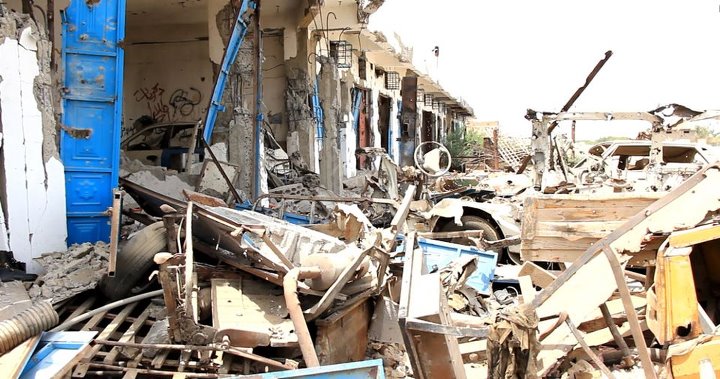
Eighteen months of war has certainly plunged the already impoverished country beyond destitution. The severe impact of the war was well-described last year by Red Cross chief, Peter Maurer, who wrote that, “Yemen after five months looks like Syria after five years.” The scale of devastation is on the rise by the day; there’s a type of death in Yemen which is unmeasurable, since if the bullets and shelling don’t kill you, the lack of food, water and medicine will. I lost count of my relatives, friends and friends’ relatives who have died in the wake of the catastrophic humanitarian situation. In light of Yemen’s failed peace talks and the early warnings of Yemen slipping into famine, Yemenis are unsurprisingly hungry both for food and peace.

Photo courtesy/ Akram Alrasny


Food as a weapon of war

Just as wars are never a coincidence, neither is hunger - it’s man-made. Hunger was already prevalent in Yemen long before war erupted in March 2015. Yemen had been in a state of chronic food insecurity for years, ranking near the bottom of the Human Development Index, while ousted President Ali Abdullah Saleh was piling up his wealth in billions.

Thursday, February 12, 2015

Poverty, Yemen's #1 Human Right Violation

Picture/ Eric Lafforgue

"Just over 10 million people in Yemen need food assistance, including 840,000 acutely malnourished children, while about 13 million have no access to safe water and sanitation, and more than 8 million lack adequate healthcare. " -The Guardian

Wednesday, November 27, 2013

Yemen's Curse, Poverty


From Yemen's street wall: "Poverty is a heavy curse." by the talented Murad Subay

Thursday, October 24, 2013

Yemen Suffers Alarming Level of Hunger, Global Hunger Index 2013

"Nineteen countries still have levels of hunger that are “extremely alarming” or “alarming”. Most of the countries with alarming GHI scores are in Africa south of the Sahara. The only exceptions are Haiti, India, Timor-Leste, and Yemen." -International Food Policy Research Institute >>>

Friday, August 30, 2013

Disproportional Wealth Distribution, Yemen's Recipe for Poverty


It's estimated that nearly 60% of Yemeni children under the age of 5 are malnourished; meaning that their brains can be permanently damaged and they would never be able to walk. Those children's parents are not able to feed them as millions of Yemenis live on less a dollar per a day.

In parallel, Yemeni officials - ousted prs. Ali Saleh, his sons, his nephews, his clan, current prs. Hadi, his relatives and a great number of Yemen's ministers fly around the world with private jets, siphon off the wealth of their country to line their own pockets.

Yemen's ousted dictator, Saleh's wealth is estimated to be US$35 billion, according to a report by Canadian business.

A satellite image exhibiting Ahmed Saleh's grand house area. 

Saleh's son, the former commander of the republican guard unit (it's not clear yet if he still has that post) and the current Yemen's ambassador to UAE, Ahmed Ali Saleh possesses a grand house that's located in an area of ​​more than half a square kilometer! The area contains a horse stables and playgrounds. On top of that, he owns several grand houses around Sana'a city. 

Over the last decade, reporters have always emerged about the wealth of Saleh's sons and relatives inside Yemen, the US, and Europe. That's just a slice of what is really going on. The names mentioned here are not the only filthy rich politicians in Yemen but they demonstrate the wide gap between the poor and the rich. Bear in mind, there is no a transparency mechanism to the public by the state to display how the national income is spent.  

Friday, July 27, 2012

Activists from the Yemeni Community in UK Exert Their Strength to Help Yemen

Yemen Relief and Development Forum (YRDF) in London, UK, founded by a group of activists , continues to exert its efforts in adressing poverty and food crisis in Yemen by organizing several programs for needy groups inside Yemen. Today, they are calling for volunteers inside UK who can help in organizing a number of projects ahead on relief and development for Yemen.

Awssan Kamal, a member of the UK community recently vlogged to call for volunteers to join the forum. If you're in London, please consider this.


The forum is holding a meeting next Saturday to discuss several related-issues with the - soon to be- volunteers. If you're in London, please pass by. You can find info about that here.

Here are few pictures from last year compagine they organized for Yemen; collecting boxes of food and clothes from the Yemeni community in UK. They later shipped the stuff to Yemen and handed the stuff to needy families in cooperation with several local NGOs.


The two pictures above were taken in London while the team was organizing the shipment

And here is when the shipment arrived to Yemen


For more pictures you can visit the UK Yemen Aid team's facebook page here. And if you need to contact Awssan Kamal, you can email him awssan_1@hotmail.com

Friday, July 13, 2012

In Pictures: IDPs in Aden From Abyan

Filmmaker and photographer, Ammar Basha took the following photos for the IDPs in Aden from Abyan. He also documented lots of scenes of the destruction which the security forces and armed militants' fight caused to the city. Really heartbreaking photos! He wrote (in Arabic) about the series of photos the following:-

هذا الالبوم يحتوي على لقطات للنازحين من ابين في عدن والتي ايضا ستكون الجزء الثالث من سلسلة افلام ( يوم واحد في قلب الثورة)على قناة
ThawratShabab
في اليوتيوب. . كما يحتوي على بعض اللقطات التي تمكنت من التقاطها للدمار الذي حل بمدينة زنجبار يعيش النازحين الان في عدة مدارس في انحاء عدن، تختلف الفئات العمرية مع وجود العديد من المعاقين وكبار السن الذين هم في امس الحاجة الى رعاية صحية وبيئة نظيفة. هذه المدارس تفتقر لمكونات الحياة الاساسية . وفي درجات حراره عالية مع انقطاع التيار الكهربائي المتواصل.

يعيش النازحين في ظروف قاسية حيث وان الكثير منهم دمرت ونهبت منازلهم قي ابين، يتمنى الكثيرون منهم العودة الى ابين التي لا تزال مليئة بلالغام مع إفتقارها للماء الكهرباء. الجدير ذكره هو شكوى النازحين من عدم زيارتهم وتفقد احوالهم من قبل مسؤلي الدولة. الامر الذي يشعرهم بالاسى بعد ما استبشروا خيرا بانتخاب عبد ربه منصور هادي.


Wednesday, July 27, 2011

Road Map, Early Elections & Ramadan

“I have a road map,” Abdo Rabu Mansour Hadi, Saleh’s vice stated couple days ago about “some kind” of a “map” that could help the country get out of the political turmoil it’s suffering from that has been taking place since last January.

I’d like to say humbly that I, myself have a road map for Yemen to get out of this suffocating political turmoil. A map that I claim could lead the uprising to become a success. My road map is .. Early Elections.. ; Parliamentary elections, then presidential elections, something like that. I’ve read online a piece coming from an opposition political party stating on the same map I’m talking about and I think it sounds good. I hate to think that Yemen’s revolution has become or could become a failure. My most favorite merit of the revolution is that Yemenis are more politically aware than ever before. Yemenis are no more afraid to discuss those “sensitive” issues in Yemen’s politics. I wish Yemenis take this chance, have the early elections and take matters step by step. Let’s have an election as soon as possible, regardless of the matter related to Saleh.


I might sound stupid to think that such a map could solve matters in Yemen. However, I know for sure that the international and regional efforts to help Yemen are truly insufficient. No one could help Yemen, except the Yemenis themselves. My map might be wrong and I might get criticism, but at least I’m trying to think of something that could help.


The situation in Yemen, in all levels, the humanitarian, economical, political, and security levels, is worsening day by day. It breaks my heart the news I read and watch about Yemen while I’m far away in Sweden. It breaks my heart to read messages from my relatives and friends in Yemen, telling me how difficult and harsh life became in Yemen. The World Food Programme (WFP)is expanding its food assistance to the total population of 50,617 internally displaced persons who have fled fighting in Abyan governorate and who are now residing with host families or in vacant schools in Aden. WFP was already providing assistance to 18,168 IDPs living in schools, but the agency will now include the whole displaced population in Aden in its food distribution.

With every bite of food I take, I remember all those displaced people who are forced to flee their homes and suffering the most of the fighting in those governorates. I think of them all the time, and the hardships they experience. It hurts and I can’t enjoy food anymore.


Yemen, the already poor country is now having the toughest time economically. Economists say that Yemen’s uprising has cost its industrial and trade sectors at least $17 billion. A large number of factories and plants had closed down, lying off tens of thousands of workers. Central bankers are under pressure to raid reserves, said to be around $4.5 billion. Countless casual jobs have been lost. Of course, the longer the political turmoil last, the tougher time Yemen’s economy will face. We are talking here about an ALREADY POOR country which means this country CAN’T afford suffering more than what it already suffers from.

Ramadan, the holy month in the Islamic agenda is very very very important for almost all Yemenis. This month has its own economical burdens. Today, prices of flour and wheat increased %38 up while prices of rice increased up to between %30 to %67. Those numbers indicate of a tough future. More than half of Yemen’s population are workers and of low-incomes. This should not continue! 7araaaaaaaaaaaaaaam ,, : ( why should a poor family in Yemen gets poorer due to a political unrest!! It’s unfair! The uprising should guarantee more stable and descent life for all Yemenis, especially the poor ones.


Ramadan is a very spiritual month for me and many others in Yemen and around the Muslim world. I’m praying and I’ll be during this month, asking Allah to make Yemenis take control of their future and have the early election –my map- , because neither America nor Saudi Arabia would solve Yemen’s issues.

Friday, June 17, 2011

Yemen, Poorest Country In The Arab World

By Noah Browning

In a multi-part series, National Yemen examines the ways in which international news describes Yemen and its current challenges. Appealing to readers generally unfamiliar with the country, analysis of Yemen is more often then not accompanied with a repetitive series of labels (“Yemen is the poorest country in the Arab World, “Yemen is the ancestral home of Osama Bin Laden, “Yemen is largely ungoverned”) that provide a hasty and often inaccurate snapshot.

Here, these claims are dissected and the news and political agendas that lie beneath them are explored.


This remains the most persistent – and most obviously inaccurate – description attributed to Yemen. Just in the last two weeks, the New York Times, the Reuters, and CBS news have indulged in this falsehood.

Few can doubt the serious and manifold developmental problems that face Yemen, or ignore its obvious, grinding poverty. So it is important to acknowledge that Yemen is in fact one of the most poverty-stricken, corrupt, and developmentally-challenged countries not only among the Arab countries, but in the whole world.

Not just poverty, but unequal distribution of wealth, poor governance, and lack of foreign investment are the hallmarks of the countries depressed economic landscape.

Still, as matter of pure fact – according to most reliable definitions of what constitutes the “Arab World,” and an array of metrics used to assess poverty – Yemen is not the poorest country in the Arab World.

The labels “poor” or “poorest” are powerful, and powerfully negative. The discussion of their use here is not meant to engage in the kind of unconstructive and border-line cruel name-calling that the international media engages in.

Rather, it is meant to show that calling Yemen the poorest Arab country is not only inaccurate and hence unprofessional and irresponsible. But also, it shows that journalism’s employment of the phrase lazily equates the coverage of terrorism and political crisis, which are the inevitable subject of their reportage, with some fantastical notion of the country’s supposedly unique impoverishment.

The Arab World consists of vast array of peoples and countries with historical, linguistic, and ethnic ties. Its membership could be considered a subject of some debate, but surely members of the international media cannot be the arbiters of who is Arab and who is not – especially if these choices serve to rationalize politicized news agendas or vindicate tired clichés.

The Arab League, the most formal, established, and mutually-recognizing institution by which the “Arab World” interacts, must serve as the most reliable list of Arab states. And unfortunately for those in the foreign press who would try to caricaturize Yemen, the League of 22 countries spans from Mauretania in the West, to Comoros in the South, and Sudan, Djibouti, and Somalia at its center.

Clearly, none of these countries are economic powerhouses, all suffer from acute and seemingly irremediable poverty, and all have varying degrees of social and political strife that the international media occasionally deigns to cover.

Still, all of these countries, in most measures of what constitutes “poverty,” are in a far more grave and undeveloped situation than Yemen.

The most comprehensive measurement of development, or the lack thereof, is the United Nation’s annual Human Development Index, which transcends measurements of gross domestic product, whether per capita or nominal, to incorporate a range of relevant factors such as literacy, gender equality, child mortality, and others.

In all these regards, Yemen, while hardly a paragon of these values, and dangerously near the bottom of the global list, still placed tidily ahead of the less fortunate Arab countries named above.

The Christian Science Monitor recently expanded quite extravagantly upon the standard formula by attributing to Yemen “the Arab World’s poorest economy.” Again, this is completely misleading and false.

In terms of nominal gross domestic product, Yemen’s economy outstrips Jordan and even oil-laden Bahrain. Without a doubt, Yemen’s massive population compared to these sparsely-inhabited countries makes it so that its citizens receive a drastically smaller piece of national wealth, but the fact of its more lucrative economy stands.

Not only this, but rankings of states based on GDP adjusted to the costs of basic goods and services in each country, or “purchasing power parity,” quite surprisingly find that Yemen places ahead of more nominally wealthy Arab countries such as Lebanon, Jordan, and Bahrain.

This indicates that Yemenis’ depressed incomes are more suited to purchasing certain basic necessities than citizens of these other Arab states.

In the same vein, measurements of unequal distribution of wealth puts Yemen above other, traditionally less scrutinized Arab states, such as Morocco, Jordan, and – very notably – Tunisia.

Recent scholarship in political science strongly suggests that economic dispossession and social inequality are possible forerunners of civil strife – the darling topic of news on Yemen. Perhaps the subtleties of these phenomena in Yemen, and in these other countries, deserve more frank and honest investigation by the media.

It is also interesting to note that besieged Gaza, the occupied West Bank, and Western Sahara, all of which are under massive military pressure, are also, not coincidentally, desperately poor.

While the global and regional order has prevented the people of these territories from realizing the nationhood they seek, their people are widely-acknowledged as Arabs, and their economic dispossession also deserves some recognition by international news outlets.

Gaza, for one, has 80% of its people living under the poverty line, compared to Yemen’s 45%. Still, the problems of Yemen and Gaza vary dramatically, and cannot simply be attributed to their comparable levels of poverty.

Context, and especially accuracy, in reporting would do better to ascertain the problems of all these places.

Curt and patently inaccurate slurs should not be the stuff of news, and do little to broaden understanding and discover solutions – which, after all, are the most sacred responsibilities of journalism.